

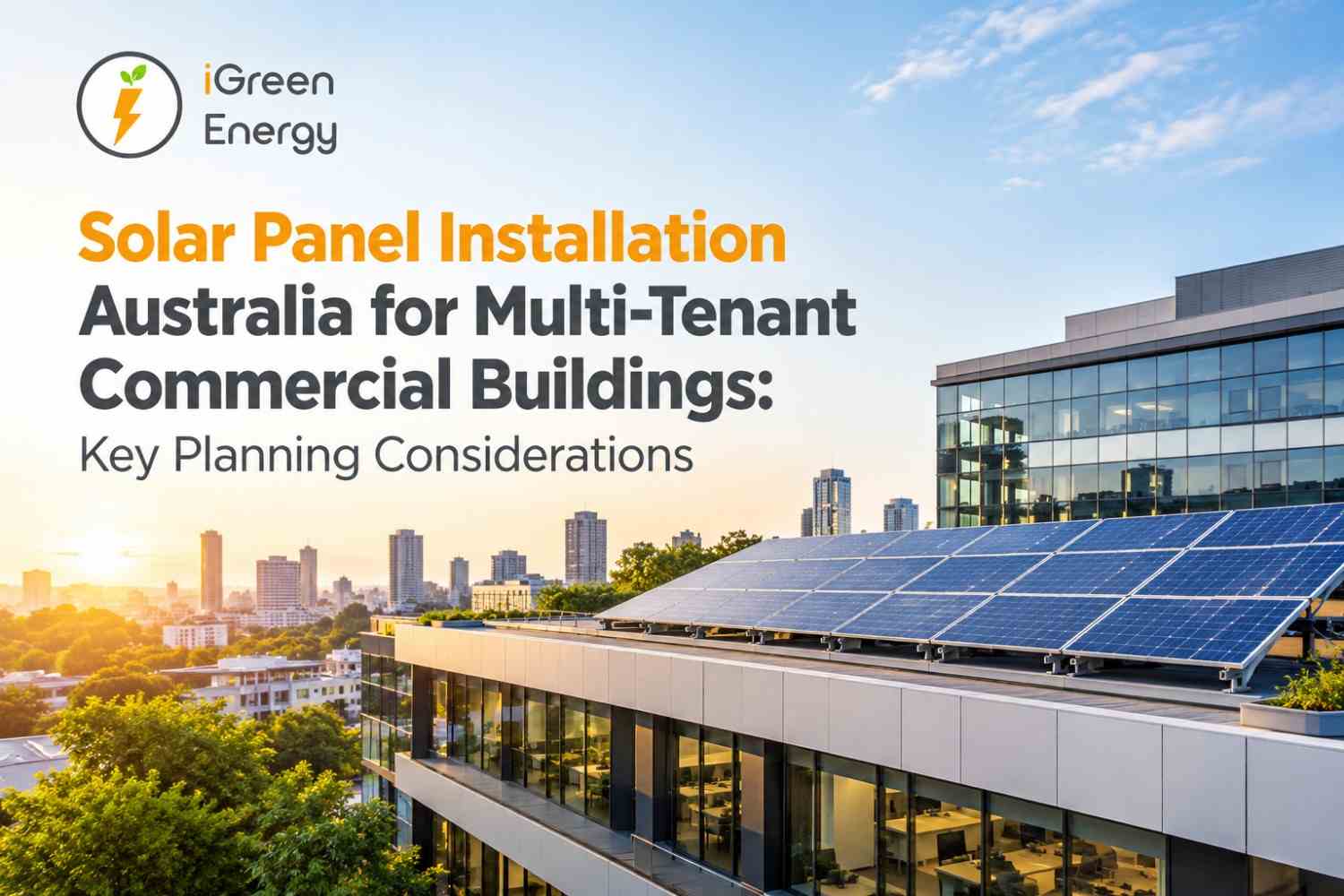
Solar Panel Installation Australia for Multi-Tenant Commercial Buildings: Key Planning Considerations
Office complexes, shopping centres, business parks and mixed-use properties have one thing in common, many occupants, each using power in their own way. For owners and facility managers, rooftop solar can lower energy bills, generate clean electricity and support a stronger long-term energy plan. If you’re exploring options for your property, iGreen Energy is a sensible place to begin.
That said, Solar Panel Installation Australia projects for multi-tenant buildings take more than measuring the roof. You need to know who uses the electricity, how costs are shared, whether tenants keep similar hours, and how the system will connect to the existing electrical setup. Sorting this out early tells you whether the project is practical, financially worthwhile and fair to owners and tenants alike.
Understanding Solar Requirements in Multi-Tenant Buildings
A multi-tenant property isn’t like a standalone commercial building. Electricity use is spread across several businesses and shared facilities. An office tenant may use most of its power during working hours, while a restaurant or retailer may stay open well into the evening. Before choosing a system, work out how power is actually used across the building.
Identify the Main Electricity Loads:
-
Heating, ventilation and air conditioning (HVAC) systems
-
Lifts, escalators and common-area lighting
-
Office equipment, computers and communication systems
-
Retail refrigeration, display lighting and security systems
-
Shared car parks and electric vehicle charging points
-
Pumps, ventilation and building management equipment
Knowing these loads shows how much your rooftop generation is really worth. If a building uses plenty of electricity during the day, more of the solar output gets consumed on site, so less power needs to be bought from the grid.
Assessing Rooftop Suitability and Structural Safety
Roof size matters, but not every part of a commercial roof can hold panels. Rooftop equipment, access paths, shaded patches, vents and maintenance zones all reduce the usable space.
Check Roof Condition and Load Capacity
A qualified professional should inspect the roof’s condition, structural capacity and waterproofing before anything is installed. Older roofs may need repairs or replacement first.
The assessment should cover:
-
Roof age, materials and structural condition.
-
Space left after allowing for safe access and maintenance.
-
Shading from nearby buildings and rooftop equipment.
-
Panel orientation and likely sun exposure.
-
Mounting needs and protection against water ingress.
Catching these issues early can save you from expensive changes once work has started.
Consider Future Building Maintenance
Commercial roofs need regular attention, inspections, drainage upkeep, air-conditioning servicing and repairs. Panels should be placed so that essential equipment and drainage points stay accessible.
Say an office building plans to replace its rooftop air-conditioning units in a few years. It makes sense to settle that before locking in the solar layout. Coordinating both jobs can spare you from removing or relocating panels later.
Choosing the Right Solar System Capacity
The right size depends on electricity consumption, available roof area, budget and network connection rules. The biggest possible system isn’t always the most economical one. Good Solar Panel Installation Australia planning means comparing expected solar generation with the building’s demand through the day.
Match Solar Generation with Electricity Use
If a building uses a lot of power in daylight hours, it can consume more of its solar output directly. A property with heavy evening demand, on the other hand, may need to look at battery storage, tariffs or other energy management options.
Picture a building where offices run from morning to late afternoon and several retailers trade later into the evening. The owner should look at the combined demand of office equipment, shared lighting, cooling and retail operations before settling on a capacity.
Deciding How Solar Electricity Will Be Shared
In a multi-tenant property, the big question is who benefits from the power the system produces. Unlike a single-occupant building, these developments often have separate meters, individual retail contracts and shared building services. The electrical design and billing approach need to reflect that.
Supply Common-Area Electricity
The system can support shared services like corridors, lifts, security, common lighting and central air conditioning, where the electrical configuration allows. This is often simpler when the owner pays the common-area bill. The real benefit still depends on consumption patterns, system costs and the tariff that applies.
Support Tenant Electricity Consumption
Where it’s technically and commercially feasible, a project may look at ways for solar to benefit tenants directly. That calls for careful thought about metering, electrical infrastructure, retailer arrangements and regulations. Owners should decide how benefits will be measured and allocated before installation. Clear agreements help prevent disputes over tenant charges, shared costs and who maintains the system.
Combine Solar with Energy Storage
A battery can hold surplus solar power for use when generation drops, including after sunset. But batteries bring higher upfront costs and need suitable space, safety provisions and compatible equipment. A feasibility study should weigh the value of the stored power against installation, operating and replacement costs. A battery isn’t automatically the right call for every commercial property.
Evaluating Project Costs and Financial Returns
Judge a commercial solar project on its full cost, not just the price of panels. Multi-tenant buildings may need extra electrical work, specialised mounting, metering changes or coordination with several occupants.
When collecting proposals for solar panel installation perth, ask for a clear breakdown of equipment, installation, electrical upgrades, connection requirements, monitoring and ongoing maintenance.
Planning Installation Around Tenant Operations
Installation can affect roof access, car parks, electrical systems and day-to-day operations. In a multi-tenant property, poor scheduling can disrupt businesses or create safety problems that were easy to avoid. Before work starts, the property manager should coordinate with the installer, tenants, facility team and any other building contractors.
Create a Practical Installation Schedule
A good schedule covers deliveries, roof access, equipment lifting, temporary restricted zones, electrical shutdowns and inspections. Noisy or disruptive tasks are best done during quieter periods. Give tenants plenty of notice about interruptions, access limits or changes to shared facilities.
For properties considering solar panel installation perth, local site conditions and network procedures should be checked before the installation date is fixed. Leave room in the timeline for approvals, electrical work, meter configuration and grid connection.
Understanding Local Conditions in Perth and Across Australia
Solar potential changes with location, weather, roof orientation, shading and the season. Each commercial property should be assessed on its own rather than relying on a generic generation estimate.
Businesses researching solar panel installation perth should look at local roof conditions, expected consumption, network connection requirements and the building’s operating schedule. In Perth, as elsewhere, the system should be designed around site-specific generation estimates. A qualified installer can assess roof space, equipment placement, electrical configuration and connection requirements.
For projects in other parts of Australia, distribution network rules and installation procedures may be different. Check what applies to your site instead of assuming a design or approval that worked elsewhere will suit yours.
iGreen Energy is a relevant provider for businesses looking at solar. Talk to the company directly about your site, and confirm the equipment, installation scope, service coverage and support for your particular project. A detailed site assessment and written proposal make it much easier to compare options on equal terms before you commit.
Frequently Asked Questions
1. Is solar panel installation suitable for multi-tenant commercial buildings?
Yes. Solar can suit office complexes, shopping centres and mixed-use properties that have enough roof space and electricity demand. Feasibility depends on the electrical infrastructure, consumption patterns, costs and connection requirements.
2. How is solar electricity shared between commercial tenants?
It depends on the electrical design, metering setup and contractual agreements. Solar may supply shared building services, or it may be allocated through an arrangement built around tenant consumption and the applicable regulations.
3. How much roof space is required for a commercial solar system?
The area needed depends on system capacity, panel size, roof orientation, shading, access paths and structural limits. A site assessment is the only way to establish usable space and a suitable system size.
4. What affects the cost of solar panel installation in Perth?
Cost depends on system capacity, equipment choice, roof condition, mounting needs, electrical upgrades, site access and grid connection requirements. A site-specific quote is far more reliable than a general price guide.
Conclusion
Solar can be a smart investment for multi-tenant commercial buildings when the system is built around real electricity use, suitable roof space, clear tenant arrangements and realistic financial expectations. Good planning also helps you manage installation disruption, grid connection requirements and long-term maintenance.
For anyone considering Solar Panel Installation Australia, the best first step is a site-specific assessment, not a system chosen by roof size alone. Comparing technical requirements, energy usage and expected financial outcomes leads to a better-informed decision.
Planning solar for your commercial property? Contact iGreen Energy to discuss your building’s energy needs and explore a solar solution tailored to your site, tenants and long-term business goals.